The AI Supercycle and Peace Deal

A transformative shift occurred as a sharp divergence between a generational boom in artificial intelligence and a deep energy crisis began to resolve with a historic diplomatic peace deal. While equity valuations extended to break previous records in the United States and in tech-heavy Asian markets, the global economy is now emerging from the stress of the Strait of Hormuz blockade, which had removed millions of oil barrels from global and daily supplies. However economic data released in May confirmed that energy prices have begun to bleed into the broader economy.
Headline inflation for the United States recently accelerated to a three-year high, along with an increase in producer prices, which possibly marks a peak for recent inflation rates. Still, the energy-led price shocks have shifted the narrative regarding the future of interest rates among regulators in charge of monetary policies. As new leadership changes over in the Federal Reserve, labor markets are tight, and the energy shock threatens inflation, all while the White House demands rate cuts. Moreover, the European Central Bank and the Bank of England have sounded cautious as of late, leading investors to expect future interest rate hikes.
Beyond the macroeconomy, the infrastructure buildout of artificial intelligence remains a growth engine for the American economy. Strong economic expenditures and business profits have led equity markets to new heights, with the S&P 500 rising above 7500 for the first time! Even South Korean and Taiwanese stocks broke records, as Asian exports of semiconductors surged due to strong memory demand for computers.
“Strong economic expenditures and business profits have led equity markets to new heights. Specifically, with the S&P 500 rising above 7500 for the first time!”
Stocks closer to home performed well after Nvidia, a critical designer of semiconductors, obtained export permissions for products headed to China. Moreover, investors patiently wait for the highly anticipated initial public offerings of many high-profile companies that are currently owned by private investors.
While diplomacy over multiple months faced significant hurdles, the meeting between Presidents Trump and Xi Jinping proved pivotal, as China upheld its promise to help with the Iranian negotiations. As of now, the feared energy disruptions and rationing narratives are being replaced with the prospects of normalized supply chains and replenished global inventories. While Taiwan remains important for China, China promised to increase its commodity purchases from the United States. Across commodity markets, copper prices have surged, supported by the electrification of data centers and export bans on sulfuric acids. Gold remained volatile as investors weighed uncertainty against rising government bond yields.
As mid-summer approaches and a final peace deal may be close soon, the Strait of Hormuz can reopen, so investors can remove those geopolitical risks from their calculus. Specifically, the “productivity boom” from AI has provided the tailwinds needed to survive the energy shock. However, the lingering effects of the shock may influence monetary policies for longer than many had anticipated not that long ago.
Geopolitical
A significant geopolitical development recently unfolded as the United States and Iran announced a framework agreement to end the conflict, reopen the Strait of Hormuz, and begin a 60-day negotiation process focused on Iran’s nuclear program and regional stability. The agreement represents the most meaningful de-escalation since hostilities began earlier this year.
Although key implementation details remain subject to further negotiations, markets responded favorably to the prospect of normalized energy flows. Negotiations surrounding Iran’s nuclear activities, sanctions relief, and frozen Iranian assets are expected to continue in the months ahead, leaving the durability of the agreement uncertain.
Oil prices moved sharply lower following the announcement as investors removed a portion of the geopolitical risk premium that had built up during the conflict. Expectations for improved global energy supplies and a gradual return of Iranian oil exports contributed to the decline.
Beyond energy markets, a sustained reopening of Hormuz could help ease inflationary pressures by lowering oil, gasoline, and transportation costs. At the same time, the administration continues to pursue a more targeted tariff strategy aimed at supporting domestic manufacturing while limiting additional inflation pressures.
Inflation & Jobs
Inflation has once again become the primary focus for investors as recent data shows price pressures remain well above the Federal Reserve’s 2% target. Rising energy costs and broader price increases across the economy suggest inflation may take longer to moderate than many had expected.
The Fed’s preferred inflation measure, Personal Consumption Expenditures (PCE), continued to move higher, while core inflation—which excludes food and energy and is closely watched by policymakers—has shown renewed signs of persistence.
Consumer inflation data also highlighted the impact higher prices are having on households. Energy costs were a significant contributor to recent increases, but the effects are increasingly spreading to everyday expenses such as food and transportation. As a result, wage growth has struggled to keep pace with inflation, placing additional pressure on household budgets.
“Rising energy costs and broader price increases across the economy suggest inflation may take longer to moderate than many had expected.”
Inflation pressures are also evident at the wholesale level, where producer prices have continued to rise. Higher input costs create the risk that businesses will pass additional price increases on to consumers, potentially making it more difficult for inflation to return to the Fed’s target.
At the same time, economic growth has begun to slow modestly, but the labor market remains relatively healthy. Job creation has continued to exceed expectations, and unemployment remains low, reducing the likelihood that the Fed will lower interest rates in the near term.
Going forward, we will be closely watching energy prices, inflation trends, and consumer spending patterns for signs that price pressures are either easing or becoming more entrenched.
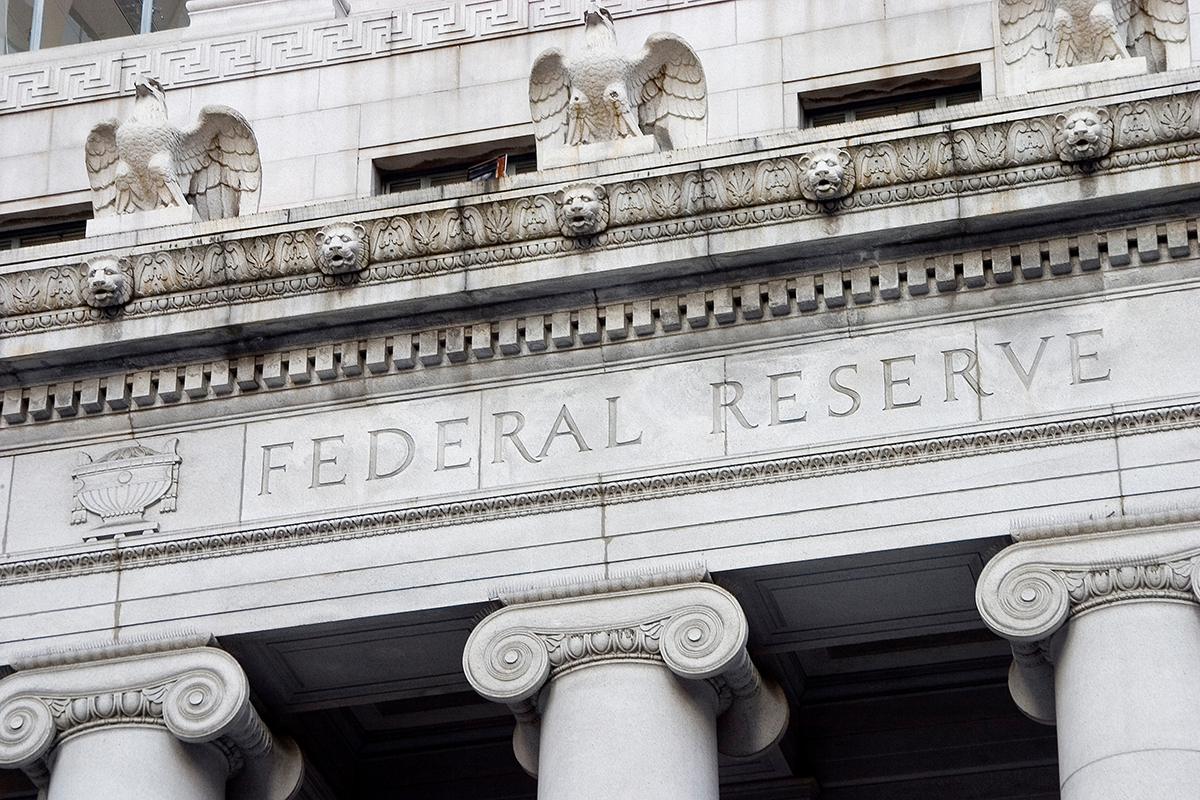
Federal Reserve
The Federal Reserve will enter its next meeting facing a difficult balancing act as inflation remains above target while the broader economy continues to show resilience.
The labor market remains a key reason policymakers are reluctant to shift toward lower interest rates. Employment growth has remained stronger than expected, unemployment remains relatively low, and Fed officials continue to view the economy as healthy enough to withstand current interest rate levels.
As a result, the conversation at the Fed has shifted away from when rate cuts may occur and toward how long rates may need to remain elevated. While no immediate policy changes are expected, policymakers have become increasingly cautious about declaring victory over inflation.
“The labor market remains a key reason policymakers are reluctant to shift toward lower interest rates.”
Higher market interest rates are already tightening financial conditions by increasing borrowing costs for consumers and businesses. This provides some additional restraint on economic activity even without further action from the Federal Reserve.
For investors, upcoming inflation data remains the most important variable to watch. Continued inflation pressures could delay rate cuts and create additional market volatility, while evidence of moderating inflation would likely support both bond and equity markets. For now, the Fed appears focused on ensuring inflation continues moving lower before considering meaningful policy easing.

Stocks
The recent potential peace deal between the US and Iran has given stocks even more support as of late. The Middle East conflict has had broad impacts on equity prices and the global economy. Oil is directly impacting inflation, which influences the Fed’s monetary policy decisions and ultimately interest rates. All of these factors influence the economic backdrop and consumer confidence. Equities hate uncertainty, so resolution across these various factors would be beneficial to investors long-term. With that said, it is important to avoid chasing returns. Certain aspects of this potential resolution have likely already been factored into certain equity prices in anticipation of a peace deal.
Another recent major headline was SpaceX’s IPO, which was a record debut. This marked the first of several expected AI-related IPOs to come. The size of the IPO has opened some debate and differences among index providers on how to handle the inclusion of SpaceX, and possible other large future IPOs.
Overall, equity markets have experienced continued momentum. Since the beginning of the year, attractive returns have been shared across both the US and foreign markets. Generally speaking, large caps have outperformed small caps. But the emerging markets have posted the strongest returns over that time. One-year returns over almost every major broad equity market have generated above-average total returns. This has been a welcome outcome for equity investors, but also something that should be considered when crafting long-term financial plans. Specifically, these shorter-term returns shouldn’t be expected to persist as the norm moving forward, as stocks move through various cycles.
Bonds
Two‑year Treasury yields have moved up beyond the Fed’s current policy rate, which is indicating that policy isn’t tight enough for the inflation backdrop. This also may suggest the actual neutral Fed Funds Rate may be higher than policymakers have been assuming.
Overall, bonds have been quite flat since the beginning of the year. Longer-term bonds have declined in total return, whereas shorter-term bonds have been more resilient. Certain bond sectors, such as inflation-protected bonds, have had some of the strongest year-to-date returns. High-yield bonds have also been one of the top performers.
Corporate bonds have been some of the best return-generating fixed-income sectors over the last few years. Treasuries have generally continued to struggle coming out of the rate hike cycle years ago. These trends make evident the importance of diversification in fixed income allocations.
© Advisory Alpha. Registration with the SEC or a state does not constitute an endorsement of the firm by regulators, nor does it indicate that the adviser has attained a particular level of skill or ability. This content is for informational purposes only and does not intend to make an offer or solicitation for the sale or purchase of any securities. Investing involves risk, including the potential loss of principal. No investment strategy, such as asset allocation or diversification, can guarantee a profit or protect against loss in periods of declining values. All investment strategies involve risk and have the potential for profit or loss. Changes in investment strategies, contributions or withdrawals, and economic conditions may materially affect the performance of your portfolio. There are no assurances that a portfolio will match or outperform any particular benchmark. Investors should carefully consider the investment objectives, risks, fees, and expenses before investing. Any financial services firms referenced in this material do not provide tax or legal advice. Please consult with your tax or legal professional regarding specific issues prior to making a tax or legal decision.
The performance information presented in the asset category section of this report is based on equal-weighted averages of the following Morningstar Categories: US Stocks (US Fund Large Blend, US Fund Mid-Cap Blend, US Fund Small-Blend), Foreign Stocks (US Fund Foreign Large Blend, US Fund Foreign Small/Mid Blend, US Fund Diversified Emerging Mkts), US Bonds (US Fund Intermediate Government, US Fund Inflation-Protected Bond, US Fund Corporate Bond, US Fund High Yield Bond, US Fund Bank Loan), Foreign Bonds (US Fund World Bond, US Fund Emerging Markets Bond), Hard Assets (US Fund Commodities Precious Metals, US Fund Commodities Energy, US Fund Global Real Estate, US Fund Real Estate), Hybrid Assets (US Fund Convertibles, US Fund Preferred Stock).
© 2026 Morningstar. All Rights Reserved. The information contained herein: (1) is proprietary to Morningstar and/or its content providers; (2) may not be copied or distributed; and (3) is not warranted to be accurate, complete, or timely. Neither Morningstar nor its content providers is responsible for any damages or losses arising from any use of this information. Past performance is no guarantee of future results. Morningstar category data is provided for illustrative purposes only to demonstrate a hypothetical investment vehicle represented by a group of similar investments. Morningstar category data is an aggregation across actual funds contained in the category, but it is not possible to directly invest in a category. Index returns are provided for illustrative purposes only to demonstrate a hypothetical investment vehicle using broad-based indices of securities. Unmanaged indexes are not available for direct investment. All data shown does not include internal fund expenses, trading costs, financial advisor fees, commissions, or taxes. This information is not intended to predict the performance of any specific investment or security. Past performance is no guarantee of future results.
Bureau of Labor Statistics. Unemployment Rate, Total Nonfarm Employment, Labor Force Participation, Consumer Price Index, Producers Price Index. www.bls.gov. United States, Department of Commerce, Bureau of Economic Analysis. Personal Consumption Expenditures, Gross Domestic Product, Consumer Spending, Personal Income, and Outlays. www.bea.gov. Federal Reserve. Fed Funds Rate, Fed Funds Target Range, Minutes of the Federal Open Market Committee, Board of the Federal Reserve System Calendar. www.federalreserve.gov. Trump, Donald. @realDonaldTrump. Truth Social.